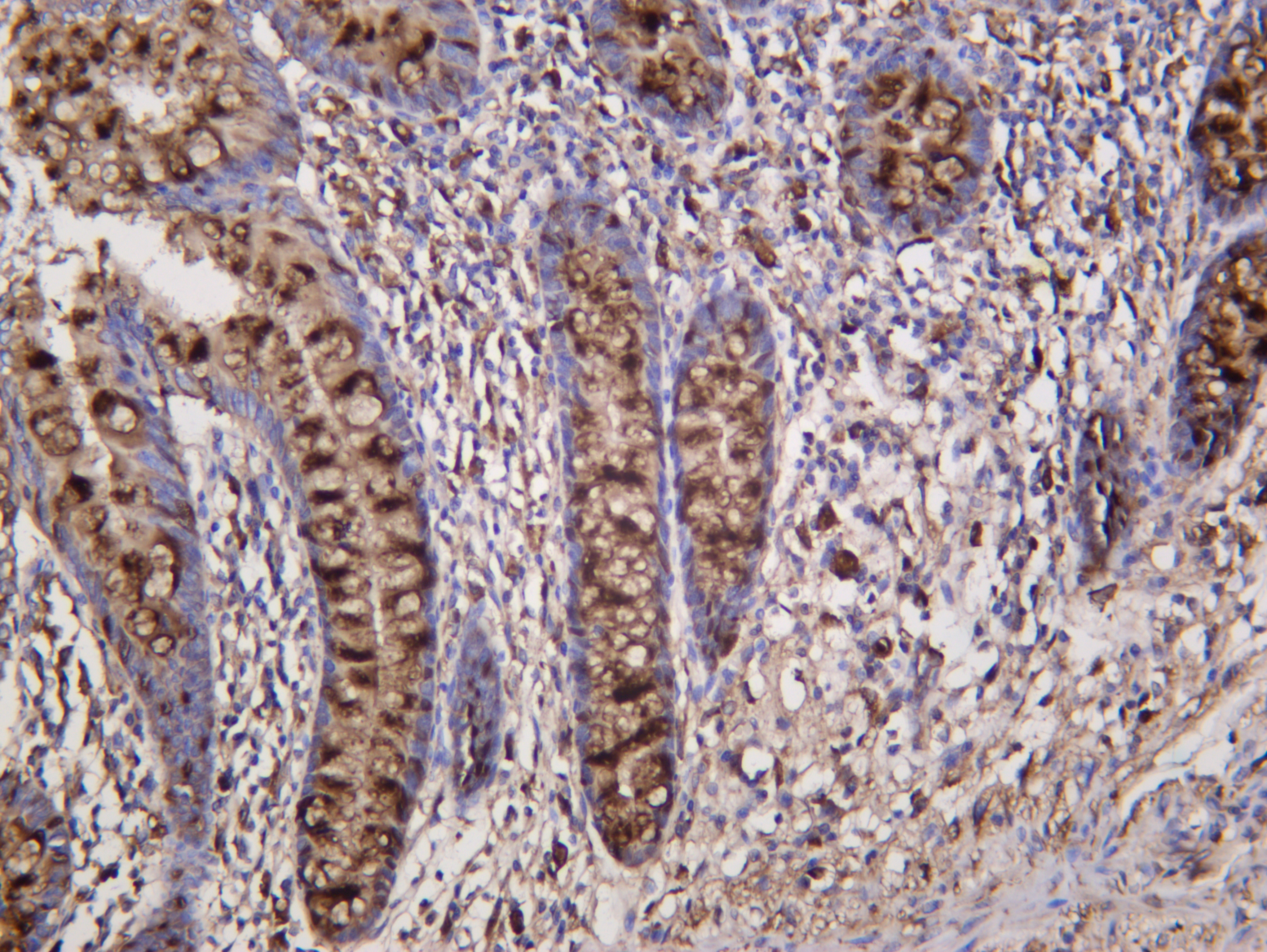

| 别名 | CST3;Cystatin-C;Cystatin-3;Gamma-trace;Neuroendocrine basic polypeptide;Post-gamma-globulin |
| 基因名称 | CST3 |
| 蛋白名称 | Cystatin-C |
| 推荐应用 | |
| 反应物种 | Human,Mouse,Rat |
| 存储缓冲液 | PBS, 50% glycerol, 0.05% Proclin 300, 0.05%BSA |
| Human Swissprot No. | P01034 |
| Mouse Gene ID | 13010 |
| Mouse Swissprot No. | P21460 |
| Rat Gene ID | 25307 |
| Rat Swissprot No. | P14841 |
| 特异性 | Endogenous |
| 稀释度 | IHC-P 1:200-1:1000;WB 1:2000-1:10000;IF-P/IF-F/IF-ICC 1:200-1:1000;ELISA 1:5000-1:20000; |
| 参考分子量 | 16kDa |
| 预测分子量 | 16kDa |
| 运输及保存条件 | Biological ice bag transportation. Store at -20°C for at least 12 months(Do not lower than -25°C). Avoid freeze/thaw cycles |
| 宿主 | Rabbit |
| 同种型 | IgG,Kappa |
| 背景介绍 | The cystatin superfamily encompasses proteins that contain multiple cystatin-like sequences. Some of the members are active cysteine protease inhibitors, while others have lost or perhaps never acquired this inhibitory activity. There are three inhibitory families in the superfamily, including the type 1 cystatins (stefins), type 2 cystatins and the kininogens. The type 2 cystatin proteins are a class of cysteine proteinase inhibitors found in a variety of human fluids and secretions, where they appear to provide protective functions. The cystatin locus on chromosome 20 contains the majority of the type 2 cystatin genes and pseudogenes. This gene is located in the cystatin locus and encodes the most abundant extracellular inhibitor of cysteine proteases, which is found in high concentrations in biological fluids and is expressed in virtually all organs of the body. A mutation in this gene has been associate |
| 细胞定位 | Secreted . |
| 功能 | Disease:Defects in CST3 are the cause of amyloidosis type 6 (AMYL6) [MIM:105150]; also known as hereditary cerebral hemorrhage with amyloidosis (HCHWA), cerebral amyloid angiopathy (CAA) or cerebroarterial amyloidosis Icelandic type. AMYL6 is a hereditary generalized amyloidosis due to cystatin C amyloid deposition. Cystatin C amyloid accumulates in the walls of arteries, arterioles, and sometimes capillaries and veins of the brain, and in various organs including lymphoid tissue, spleen, salivary glands, and seminal vesicles. Amyloid deposition in the cerebral vessels results in cerebral amyloid angiopathy, cerebral hemorrage and premature stroke. Cystatin C levels in the cerebrospinal fluid are abnormally low.,Disease:Genetic variations in CST3 are associated with age-related macular degeneration type 11 (ARMD11) [MIM:611953]. ARMD is a multifactorial eye disease and the most common cause of irreversible vision loss in the developed world. In most patients, the disease is manifest as ophthalmoscopically visible yellowish accumulations of protein and lipid that lie beneath the retinal pigment epithelium and within an elastin-containing structure known as Bruch membrane.,Function:As an inhibitor of cysteine proteinases, this protein is thought to serve an important physiological role as a local regulator of this enzyme activity.,miscellaneous:Potential cerebrospinal fluid marker for the diagnosis of Creutzfeldt-Jakob disease.,similarity:Belongs to the cystatin family.,subunit:Homodimer.,tissue specificity:Found in various body fluids, such as the cerebrospinal fluid and plasma. Expressed in highest levels in the epididymis, vas deferens, brain, thymus, and ovary and the lowest in the submandibular gland., |
| Clonality | Monoclonal |
| 细胞定位 | Secreted . |


周一至周日 8:00-18:00