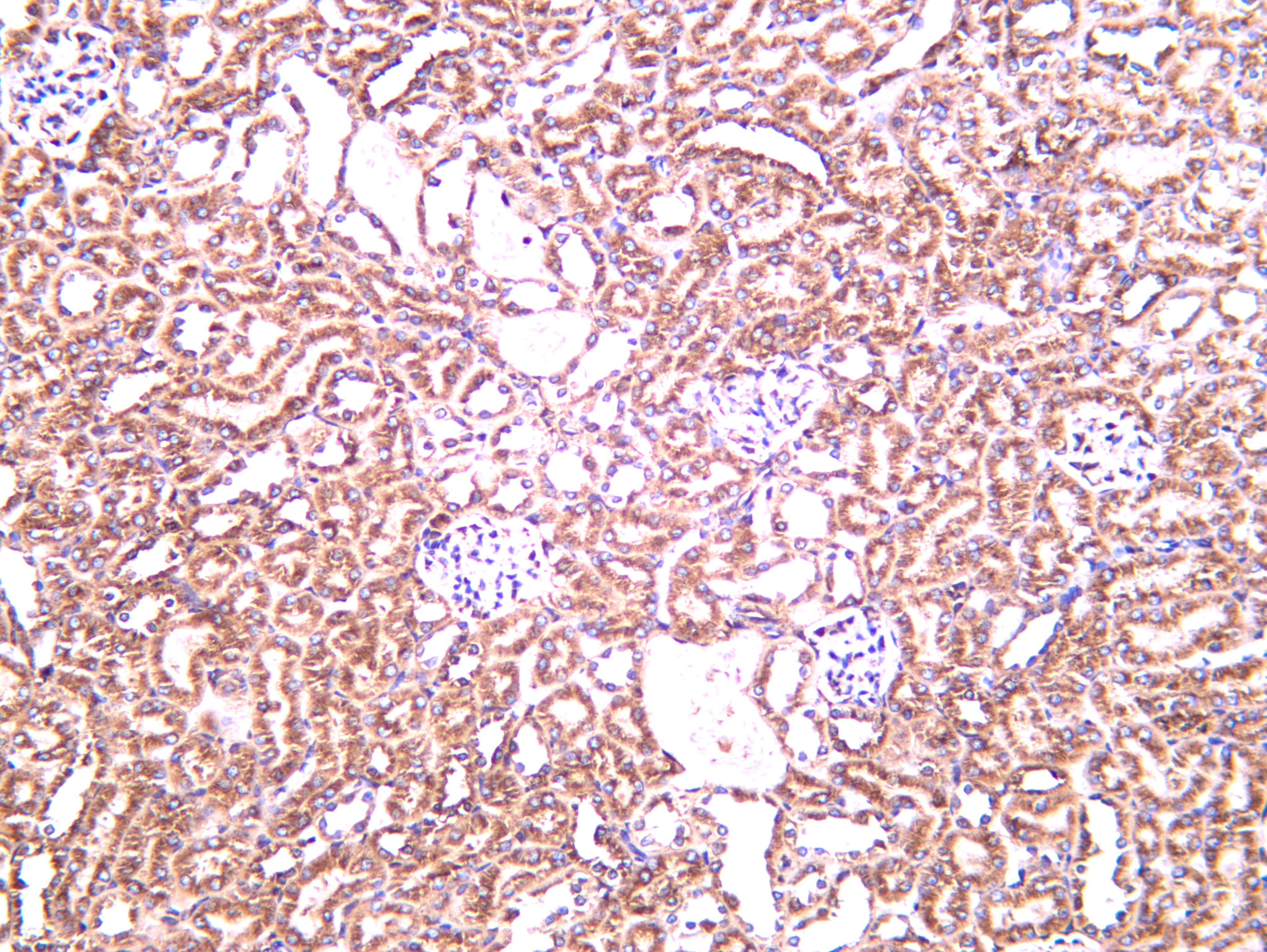
| 别名 | LNK |
| 基因名称 | SH2B3 |
| 蛋白名称 | SH2B adapter protein 3 (Lymphocyte adapter protein) (Lymphocyte-specific adapter protein Lnk) (Signal transduction protein Lnk) |
| 推荐应用 | |
| 反应物种 | Human,Mouse |
| 存储缓冲液 | PBS, 50% glycerol, 0.05% Proclin 300, 0.05%BSA |
| Human Swissprot No. | Q9UQQ2 |
| Mouse Swissprot No. | O09039 |
| Rat Swissprot No. | P50745 |
| 特异性 | Endogenous |
| 稀释度 | IHC-P 1:200-1:1000;WB 1:2000-1:10000;IF-P/IF-F/IF-ICC 1:200-1:1000;ELISA 1:5000-1:20000; |
| 参考分子量 | 65kDa |
| 预测分子量 | 63kDa |
| 运输及保存条件 | Biological ice bag transportation. Store at -20°C for at least 12 months(Do not lower than -25°C). Avoid freeze/thaw cycles |
| 宿主 | Rabbit |
| 同种型 | IgG,Kappa |
| 背景介绍 | This gene encodes a member of the SH2B adaptor family of proteins, which are involved in a range of signaling activities by growth factor and cytokine receptors. The encoded protein is a key negative regulator of cytokine signaling and plays a critical role in hematopoiesis. Mutations in this gene have been associated with susceptibility to celiac disease type 13 and susceptibility to insulin-dependent diabetes mellitus. Alternatively spliced transcript variants encoding different isoforms have been found for this gene. [provided by RefSeq, Apr 2014], |
| 细胞定位 | cytosol, |
| 功能 | Disease:Genetic variations in SH2B3 are associated with susceptibility to celiac disease type 13 (CELIAC13)[MIM:612011]; also known as susceptibility to gluten-sensitive enteropathy type 13. Celiac disease is a multifactorial disorder of the small intestine that is influenced by both environmental and genetic factors. It is characterized by malabsorption resulting from inflammatory injury to the mucosa of the small intestine after the ingestion of wheat gluten or related rye and barley proteins. In its classic form, celiac disease is characterized in children by malabsorption and failure to thrive.,Disease:Genetic variations in SH2B3 are associated with susceptibility to insulin-dependent diabetes mellitus (IDDM) [MIM:222100]; also known as diabetes mellitus type 1. IDDM normally starts in childhood or adolescence and is caused by the body's own immune system which destroys the insulin-producing beta cells in the pancreas. Classical features are polydipsia, polyphagia and polyuria, due to hyperglycemia-induced osmotic diuresis.,Function:Links T-cell receptor activation signal to phospholipase C-gamma-1, GRB2 and phosphatidylinositol 3-kinase.,PTM:Tyrosine phosphorylated by LCK.,similarity:Belongs to the SH2B adapter family.,similarity:Contains 1 PH domain.,similarity:Contains 1 SH2 domain.,subunit:Binds to the tyrosine-phosphorylated TCR zeta chain via its SH2 domain.,tissue specificity:Preferentially expressed by lymphoid cell lines., |
| Clonality | Monoclonal |
| 细胞定位 | cytosol, |


周一至周日 8:00-18:00