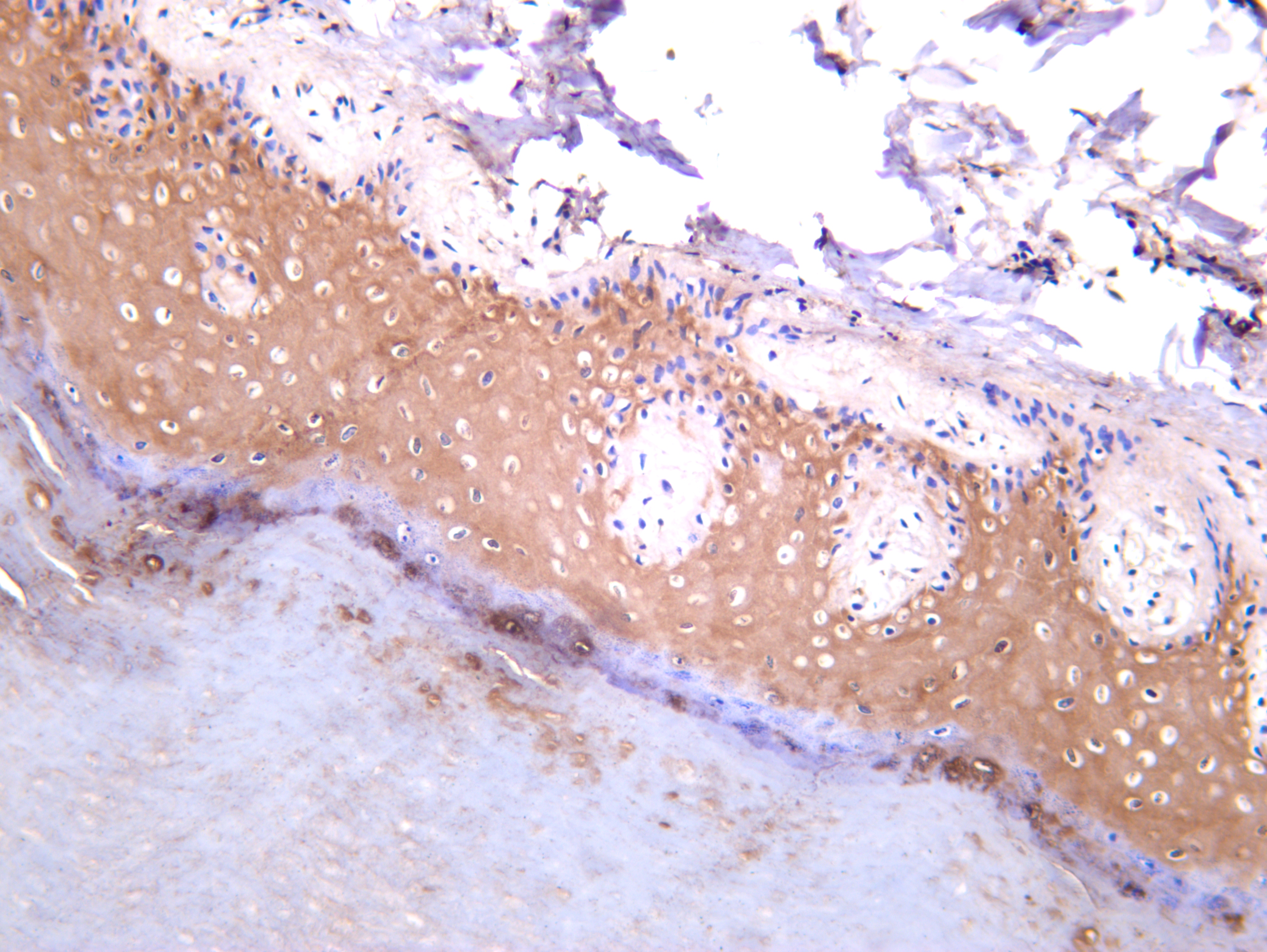
| 别名 | ECM1;Extracellular matrix protein 1;Secretory component p85 |
| 基因名称 | ECM1 |
| 蛋白名称 | Extracellular matrix protein 1 |
| 推荐应用 | |
| 反应物种 | Human,Rat |
| 存储缓冲液 | PBS, 50% glycerol, 0.05% Proclin 300, 0.05%BSA |
| Human Swissprot No. | Q16610 |
| Mouse Swissprot No. | Q61508 |
| 特异性 | Endogenous |
| 稀释度 | IHC-P 1:200-1:1000;WB 1:2000-1:10000;IF-P/IF-F/IF-ICC 1:200-1:1000;ELISA 1:5000-1:20000;IP 1:50-1:200; |
| 参考分子量 | 75kDa |
| 预测分子量 | 61kDa |
| 运输及保存条件 | Biological ice bag transportation. Store at -20°C for at least 12 months(Do not lower than -25°C). Avoid freeze/thaw cycles |
| 宿主 | Rabbit |
| 同种型 | IgG,Kappa |
| 背景介绍 | This gene encodes a soluble protein that is involved in endochondral bone formation, angiogenesis, and tumor biology. It also interacts with a variety of extracellular and structural proteins, contributing to the maintenance of skin integrity and homeostasis. Mutations in this gene are associated with lipoid proteinosis disorder (also known as hyalinosis cutis et mucosae or Urbach-Wiethe disease) that is characterized by generalized thickening of skin, mucosae and certain viscera. Alternatively spliced transcript variants encoding distinct isoforms have been described for this gene. [provided by RefSeq, Feb 2011], |
| 细胞定位 | Secreted, extracellular space, extracellular matrix. |
| 功能 | Disease:Defects in ECM1 are the cause of lipoid proteinosis (LiP) [MIM:247100]; also known as lipoid proteinosis of Urbach and Wiethe or hyalinosis cutis et mucosae. LiP is a rare autosomal recessive disorder characterized by generalized thickening of skin, mucosae and certain viscera. Classical features include beaded eyelid papules and laryngeal infiltration leading to hoarseness. Histologically, there is widespread deposition of hyaline material and disruption/reduplication of basement membrane., |
| Clonality | Monoclonal |
| 细胞定位 | Secreted, extracellular space, extracellular matrix. |


周一至周日 8:00-18:00