| 别名 | CD283;CD283 antigen;IIAE2;TLR 3;Tlr3;TLR3_HUMAN;Toll Like Receptor 3;Toll-like receptor 3. |
| 基因名称 | TLR3 |
| 蛋白名称 | Toll-like receptor 3 |
| 推荐应用 | |
| 反应物种 | Human,Mouse,Rat |
| 存储缓冲液 | PBS, 50% glycerol, 0.05% Proclin 300, 0.05%BSA |
| Human Swissprot No. | O15455 |
| Mouse Gene ID | 142980 |
| Mouse Swissprot No. | Q99MB1 |
| 特异性 | Endogenous |
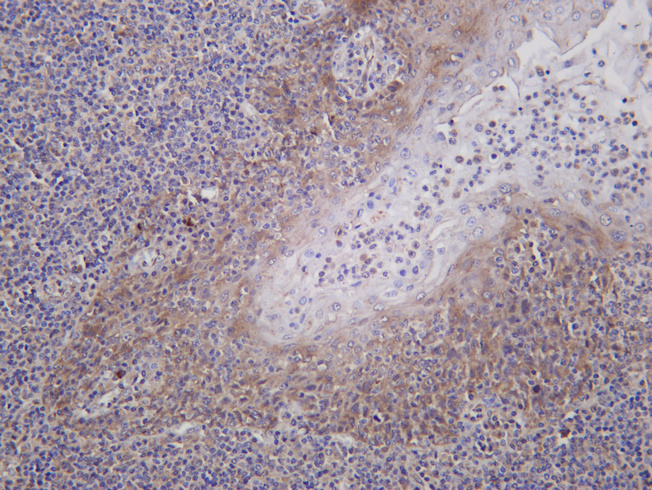
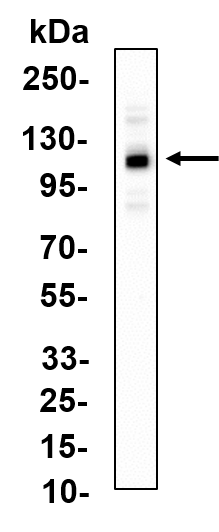
| 稀释度 | IHC-P 1:200-1:500;WB 1:2000-1:10000;IF-P/IF-F/IF-ICC 1:200-1:1000;ELISA 1:5000-1:20000; |
| 参考分子量 | 104kDa |
| 预测分子量 | 104kDa |
| 运输及保存条件 | Biological ice bag transportation. Store at -20°C for at least 12 months(Do not lower than -25°C). Avoid freeze/thaw cycles |
| 宿主 | Rabbit |
| 同种型 | IgG,Kappa |
| 背景介绍 | The protein encoded by this gene is a member of the Toll-like receptor (TLR) family which plays a fundamental role in pathogen recognition and activation of innate immunity. TLRs are highly conserved from Drosophila to humans and share structural and functional similarities. They recognize pathogen-associated molecular patterns (PAMPs) that are expressed on infectious agents, and mediate the production of cytokines necessary for the development of effective immunity. The various TLRs exhibit different patterns of expression. This receptor is most abundantly expressed in placenta and pancreas, and is restricted to the dendritic subpopulation of the leukocytes. It recognizes dsRNA associated with viral infection, and induces the activation of NF-kappaB and the production of type I interferons. It may thus play a role in host defense against viruses. Use of alternative polyadenylation sites to generate |
| 细胞定位 | Endoplasmic reticulum membrane; Single-pass type I membrane protein. Endosome membrane. Early endosome . |
| 功能 | Disease:Defects in TLR3 are the cause of TLR3-deficient herpes simplex encephalitis (HSE) [MIM:603029]. HSE is a rare complication of human herpesvirus 1 (HHV-1) infection, occurring in only a small minority of HHV-1 infected individuals. HSE is characterized by hemorrhagic necrosis of parts of the temporal and frontal lobes. Onset is over several days and involves fever, headache, seizures, stupor, and often coma, frequently with a fatal outcome.,Disease:Genetic variation in TLR3 is associated with susceptibility to progression to geographic atrophy in age-related macular degeneration [MIM:612479]. Age-related macular degeneration (ARMD) is the most common cause of irreversible vision loss in the developed world. In most patients, the disease is manifest as ophthalmoscopically visible yellowish accumulations of protein and lipid (known as drusen) that lie beneath the retinal pigment epithelium and within an elastin-containing structure known as Bruch's membrane. ARMD is likely to be a mechanistically heterogeneous group of disorders, and the specific disease mechanisms that underlie the vast majority of cases are currently unknown. However, a number of studies have suggested that both genetic and environmental factors are likely to play a role. Geographic atrophy (extensive atrophy of the retinal pigment epithelium and overlying photoreceptors) is an advanced form of 'dry' (nonneovascular or nonexudative) ARMD.,Function:Participates in the innate immune response to microbial agents. Mediates the innate immune response to ds-RNA, a sign of viral infection. Acts via MYD88 and TRAF6, leading to NF-kappa-B activation, cytokine secretion and the inflammatory response.,online information:TLR3 mutation db,PTM:Heavily N-glycosylated, except on that part of the surface of the ectodomain that is involved in ligand binding.,similarity:Belongs to the Toll-like receptor family.,similarity:Contains 1 TIR domain.,similarity:Contains 22 LRR (leucine-rich) repeats.,subunit:Binds MYD88 via their respective TIR domains (By similarity). Interacts with TICAM1. Homodimer formation is triggered by ligand binding and is required for TLR3 signaling. Binding of ds-RNA is required for the interaction with SRC.,tissue specificity:Expressed at high level in placenta and pancreas. Also detected in CD11c+ immature dendritic cells. Only expressed in dendritic cells and not in other leukocytes, including monocyte precursors. TLR3 is the TLR that is expressed most strongly in the brain, especially in astrocytes, glia, and neurons., |
| Clonality | Monoclonal |
| 细胞定位 | Endoplasmic reticulum membrane; Single-pass type I membrane protein. Endosome membrane. Early endosome . |


周一至周日 8:00-18:00