| 别名 | XPCC |
| 基因名称 | XPC |
| 蛋白名称 | XPC |
| 推荐应用 | |
| 反应物种 | Human,Mouse,Rat |
| 存储缓冲液 | PBS, 50% glycerol, 0.05% Proclin 300, 0.05%BSA |
| Human Swissprot No. | Q01831 |
| Mouse Gene ID | 22591 |
| Mouse Swissprot No. | P51612 |
| 特异性 | Endogenous |
| 稀释度 | IHC-P 1:200-1:1000, WB 1:2000-1:10000, IF 1:200-1:1000, ELISA 1:5000-1:20000 |
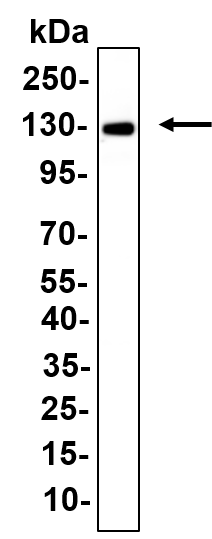
| 参考分子量 | 130kDa |
| 预测分子量 | 106kDa |
| 运输及保存条件 | Biological ice bag transportation. Store at -20°C for at least 12 months(Do not lower than -25°C). Avoid freeze/thaw cycles |
| 宿主 | Rabbit |
| 同种型 | IgG,Kappa |
| 背景介绍 | This gene encodes a component of the nucleotide excision repair (NER) pathway. There are multiple components involved in the NER pathway, including Xeroderma pigmentosum (XP) A-G and V, Cockayne syndrome (CS) A and B, and trichothiodystrophy (TTD) group A, etc. This component, XPC, plays an important role in the early steps of global genome NER, especially in damage recognition, open complex formation, and repair protein complex formation. Mutations in this gene or some other NER components result in Xeroderma pigmentosum, a rare autosomal recessive disorder characterized by increased sensitivity to sunlight with the development of carcinomas at an early age. Alternatively spliced transcript variants have been found for this gene. [provided by RefSeq, Mar 2009], |
| 细胞定位 | Nucleus . Chromosome . Cytoplasm . Omnipresent in the nucleus and consistently associates with and dissociates from DNA in the absence of DNA damage (PubMed:18682493). Continuously shuttles between the cytoplasm and the nucleus, which is impeded by the presence of NER lesions (PubMed:18682493). . |
| Clonality | Monoclonal |
| 细胞定位 | Nucleus . Chromosome . Cytoplasm . Omnipresent in the nucleus and consistently associates with and dissociates from DNA in the absence of DNA damage (PubMed:18682493). Continuously shuttles between the cytoplasm and the nucleus, which is impeded by the presence of NER lesions (PubMed:18682493). . |


周一至周日 8:00-18:00