| 别名 | CRYA1;HSPB4 |
| 基因名称 | CRYAA |
| 蛋白名称 | Alpha-crystallin A chain (Heat shock protein beta-4) (HspB4) |
| 推荐应用 | |
| 反应物种 | Human,Mouse,Rat |
| 存储缓冲液 | PBS, 50% glycerol, 0.05% Proclin 300, 0.05%BSA |
| Human Swissprot No. | P02489 |
| Mouse Swissprot No. | P24622 |
| Rat Swissprot No. | P24623 |
| 特异性 | Endogenous |
| 稀释度 | IHC-P 1:200-1:1000, WB 1:2000-1:10000, IF-P/IF-F/IF-ICC 1:200-1:1000, ELISA 1:5000-1:20000 |
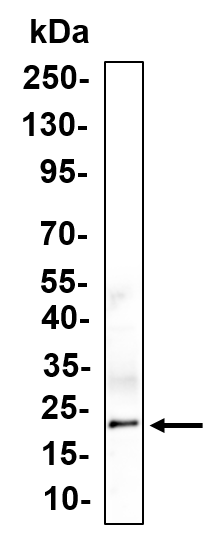
| 参考分子量 | 20kDa |
| 预测分子量 | 20kDa |
| 运输及保存条件 | Biological ice bag transportation. Store at -20°C for at least 12 months(Do not lower than -25°C). Avoid freeze/thaw cycles |
| 宿主 | Rabbit |
| 同种型 | IgG,Kappa |
| 背景介绍 | Mammalian lens crystallins are divided into alpha, beta, and gamma families. Alpha crystallins are composed of two gene products: alpha-A and alpha-B, for acidic and basic, respectively. Alpha crystallins can be induced by heat shock and are members of the small heat shock protein (HSP20) family. They act as molecular chaperones although they do not renature proteins and release them in the fashion of a true chaperone; instead they hold them in large soluble aggregates. Post-translational modifications decrease the ability to chaperone. These heterogeneous aggregates consist of 30-40 subunits; the alpha-A and alpha-B subunits have a 3:1 ratio, respectively. Two additional functions of alpha crystallins are an autokinase activity and participation in the intracellular architecture. The encoded protein has been identified as a moonlighting protein based on its ability to perform mechanistically distin |
| 细胞定位 | Cytoplasm . Nucleus . Translocates to the nucleus during heat shock and resides in sub-nuclear structures known as SC35 speckles or nuclear splicing speckles. |
| 纯化 | Protein A |
| Clonality | Monoclonal |
| 细胞定位 | Cytoplasm . Nucleus . Translocates to the nucleus during heat shock and resides in sub-nuclear structures known as SC35 speckles or nuclear splicing speckles. |


周一至周日 8:00-18:00