| 别名 | PRKCQ;PRKCT;Protein kinase C theta type;nPKC-theta |
| 基因名称 | PRKCQ |
| 蛋白名称 | Protein kinase C theta type |
| 推荐应用 | |
| 反应物种 | Human,Mouse,Rat |
| 存储缓冲液 | PBS, 50% glycerol, 0.05% Proclin 300, 0.05%BSA |
| Human Swissprot No. | Q04759 |
| Mouse Gene ID | 18761 |
| Mouse Swissprot No. | Q02111 |
| Rat Swissprot No. | Q9WTQ0 |
| 特异性 | Endogenous |
| 稀释度 | IHC-P 1:1000-1:2000, WB 1:2000-1:10000, IF-P/IF-F/IF-ICC 1:200-1:1000, ELISA 1:5000-1:20000 |
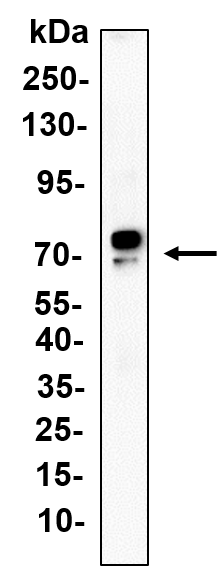
| 参考分子量 | 79kDa |
| 预测分子量 | 82kDa |
| 运输及保存条件 | Biological ice bag transportation. Store at -20°C for at least 12 months(Do not lower than -25°C). Avoid freeze/thaw cycles |
| 宿主 | Rabbit |
| 同种型 | IgG,Kappa |
| 背景介绍 | Protein kinase C (PKC) is a family of serine- and threonine-specific protein kinases that can be activated by calcium and the second messenger diacylglycerol. PKC family members phosphorylate a wide variety of protein targets and are known to be involved in diverse cellular signaling pathways. PKC family members also serve as major receptors for phorbol esters, a class of tumor promoters. Each member of the PKC family has a specific expression profile and is believed to play a distinct role. The protein encoded by this gene is one of the PKC family members. It is a calcium-independent and phospholipid-dependent protein kinase. This kinase is important for T-cell activation. It is required for the activation of the transcription factors NF-kappaB and AP-1, and may link the T cell receptor (TCR) signaling complex to the activation of the transcription factors. [provided by RefSeq, Jul 2008], |
| 细胞定位 | Cytoplasm. Cell membrane; Peripheral membrane protein. In resting T-cells, mostly localized in cytoplasm. In response to TCR stimulation, associates with lipid rafts and then localizes in the immunological synapse. |
| 纯化 | Protein A |
| Clonality | Monoclonal |
| 细胞定位 | Cytoplasm. Cell membrane; Peripheral membrane protein. In resting T-cells, mostly localized in cytoplasm. In response to TCR stimulation, associates with lipid rafts and then localizes in the immunological synapse. |


周一至周日 8:00-18:00