| 别名 | APOE;Apolipoprotein E;Apo-E |
| 基因名称 | APOE |
| 蛋白名称 | Apolipoprotein E |
| 推荐应用 | |
| 反应物种 | Human,Mouse,Rat |
| 存储缓冲液 | PBS, 50% glycerol, 0.05% Proclin 300, 0.05%BSA |
| Human Swissprot No. | P02649 |
| Mouse Gene ID | 11816 |
| Mouse Swissprot No. | P08226 |
| Rat Gene ID | 25728 |
| Rat Swissprot No. | P02650 |
| 特异性 | Endogenous |
| 稀释度 | IHC-P 1:500-1:2000, WB 1:2000-1:10000, IF-P/IF-F/IF-ICC 1:200-1:1000, ELISA 1:5000-1:20000, IP 1:50-1:200 |
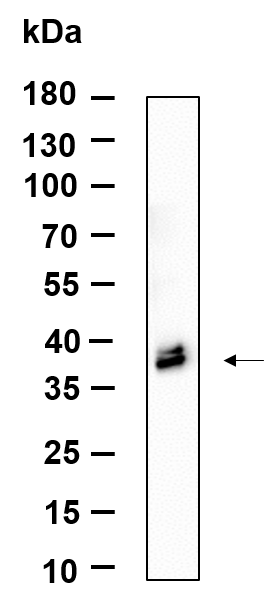
| 参考分子量 | 36kDa |
| 预测分子量 | 36kDa |
| 运输及保存条件 | Biological ice bag transportation. Store at -20°C for at least 12 months(Do not lower than -25°C). Avoid freeze/thaw cycles |
| 宿主 | Rabbit |
| 同种型 | IgG,Kappa |
| 背景介绍 | The protein encoded by this gene is a major apoprotein of the chylomicron. It binds to a specific liver and peripheral cell receptor, and is essential for the normal catabolism of triglyceride-rich lipoprotein constituents. This gene maps to chromosome 19 in a cluster with the related apolipoprotein C1 and C2 genes. Mutations in this gene result in familial dysbetalipoproteinemia, or type III hyperlipoproteinemia (HLP III), in which increased plasma cholesterol and triglycerides are the consequence of impaired clearance of chylomicron and VLDL remnants. [provided by RefSeq, Jun 2016], |
| 细胞定位 | Secreted . Secreted, extracellular space . Secreted, extracellular space, extracellular matrix . In the plasma, APOE is associated with chylomicrons, chylomicrons remnants, VLDL, LDL and HDL lipoproteins (PubMed:1911868, PubMed:8340399). Lipid poor oligomeric APOE is associated with the extracellular matrix in a calcium- and heparan-sulfate proteoglycans-dependent manner (PubMed:9488694). Lipidation induces the release from the extracellular matrix (PubMed:9488694). . |
| 纯化 | Protein A |
| Clonality | Monoclonal |
| 细胞定位 | Secreted . Secreted, extracellular space . Secreted, extracellular space, extracellular matrix . In the plasma, APOE is associated with chylomicrons, chylomicrons remnants, VLDL, LDL and HDL lipoproteins (PubMed:1911868, PubMed:8340399). Lipid poor oligomeric APOE is associated with the extracellular matrix in a calcium- and heparan-sulfate proteoglycans-dependent manner (PubMed:9488694). Lipidation induces the release from the extracellular matrix (PubMed:9488694). . |


周一至周日 8:00-18:00