| 别名 | EIF2AK3;PEK;PERK;Eukaryotic translation initiation factor 2-alpha kinase 3;PRKR-like endoplasmic reticulum kinase;Pancreatic eIF2-alpha kinase;HsPEK |
| 蛋白名称 | EIF2AK3 |
| 推荐应用 | |
| 反应物种 | Human,Mouse,Rat |
| 存储缓冲液 | PBS, 50% glycerol, 0.05% Proclin 300, 0.05%BSA |
| Human Gene Link | http://www.ncbi.nlm.nih.gov/sites/entrez?db=gene&term=9451 |
| Human Swissprot No. | Q9NZJ5 |
| Human Swissprot Link | http://www.uniprot.org/uniprotkb/Q9NZJ5/entry |
| Mouse Swissprot No. | Q9Z2B5 |
| Mouse Swissprot Link | http://www.uniprot.org/uniprot/Q9Z2B5 |
| Rat Gene ID | 29702 |
| Rat Gene Link | http://www.ncbi.nlm.nih.gov/sites/entrez?db=gene&term=29702 |
| Rat Swissprot No. | Q9Z1Z1 |
| Rat Swissprot Link | http://www.uniprot.org/uniprot/Q9Z1Z1 |
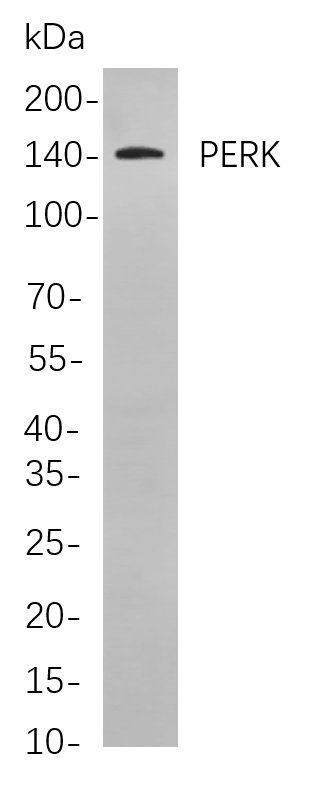
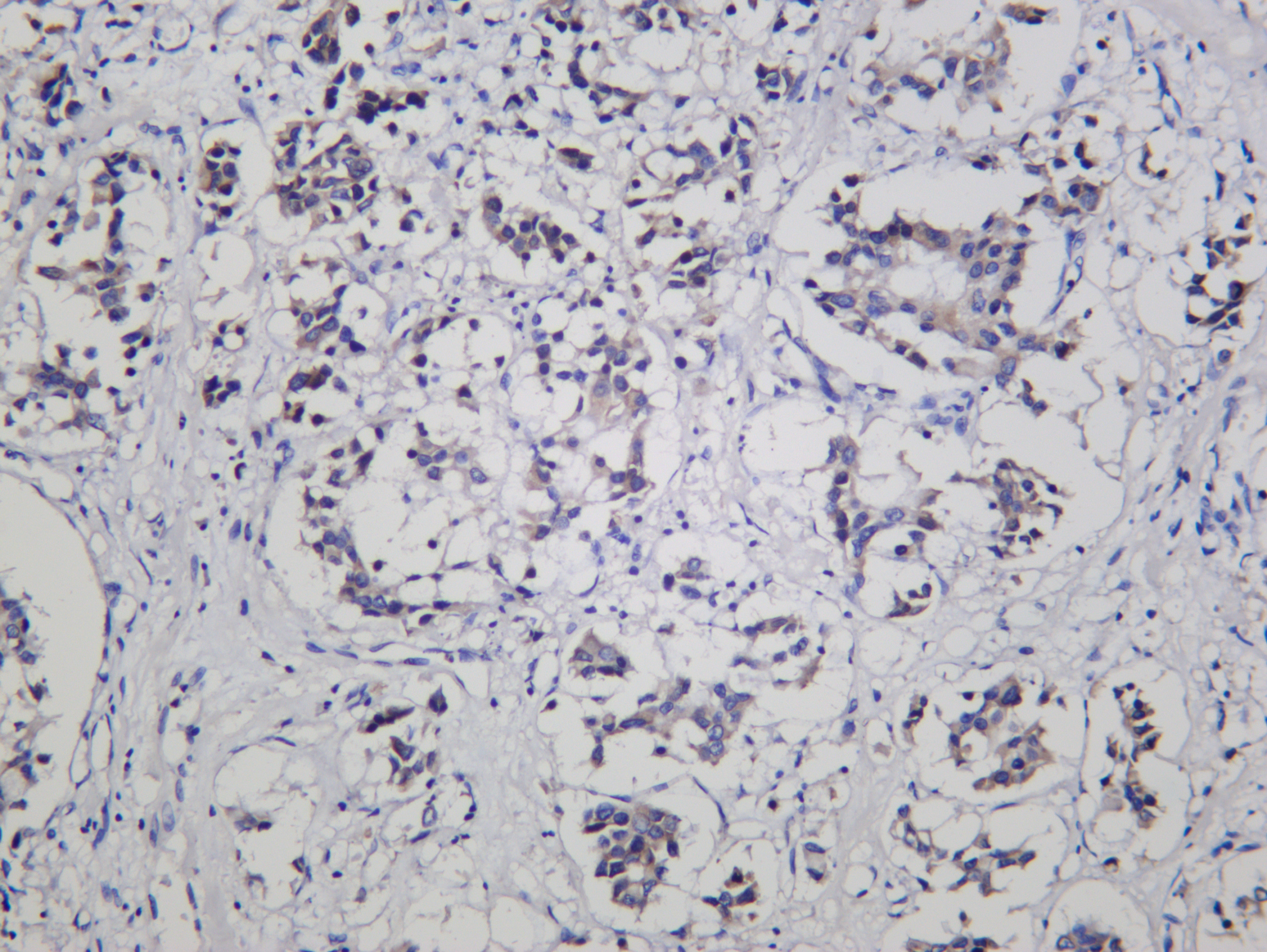
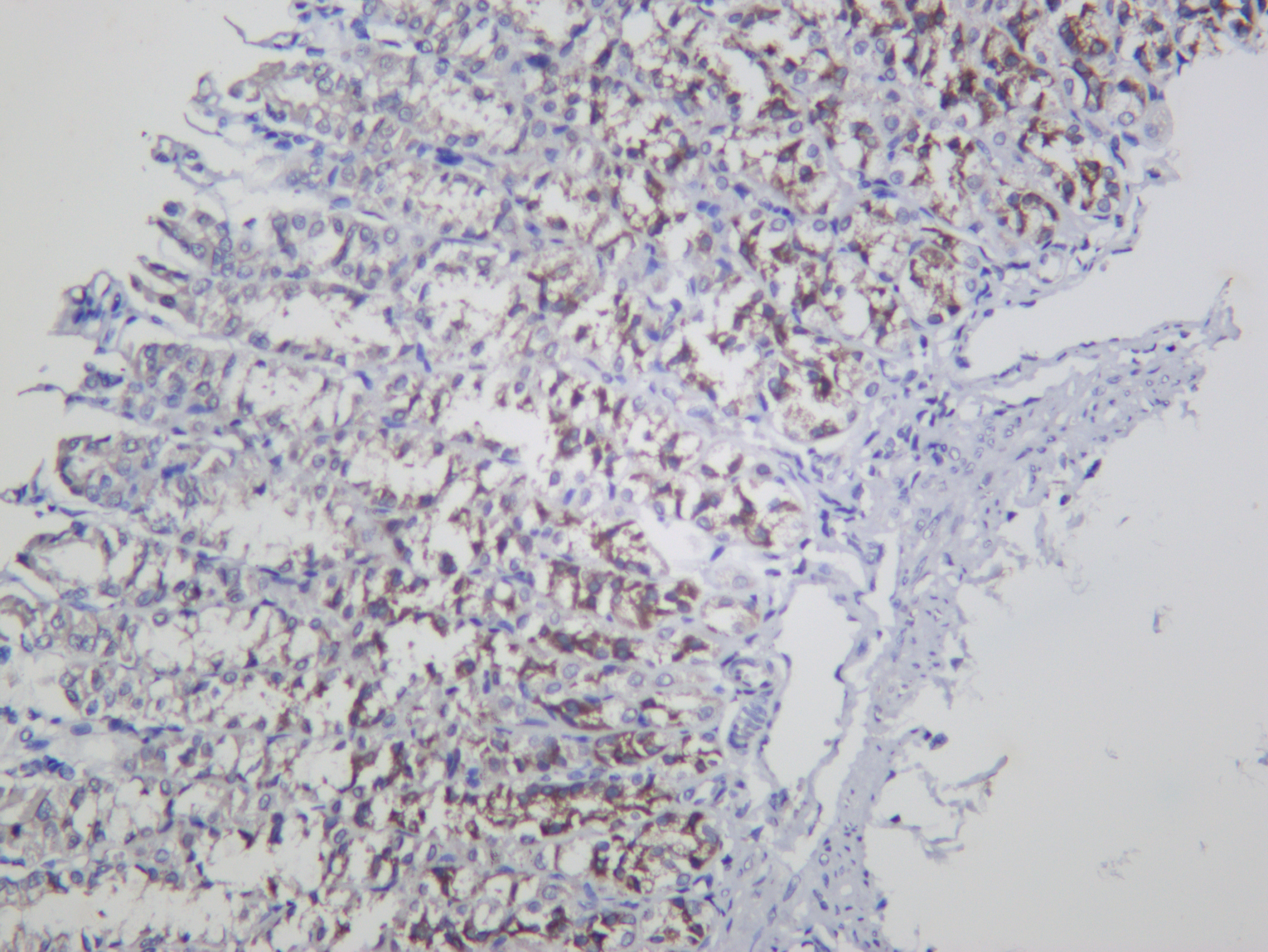
| 稀释度 | WB 1:1000-1:5000, IF-P/IF-F/IF-ICC 1:200-1:1000, ELISA 1:5000-1:20000 |
| 参考分子量 | 140kDa |
| 预测分子量 | 125kDa |
| 运输及保存条件 | Biological ice bag transportation. Store at -20°C for at least 12 months(Do not lower than -25°C). Avoid freeze/thaw cycles |
| 序列 | Eukaryotic translation initiation factor 2-alpha kinase 3 |
| 宿主 | Rabbit |
| 同种型 | Monoclonal, rabbit, IgG, Kappa |
| 背景介绍 | The protein encoded by this gene phosphorylates the alpha subunit of eukaryotic translation-initiation factor 2, leading to its inactivation, and thus to a rapid reduction of translational initiation and repression of global protein synthesis. This protein is thought to modulate mitochondrial function. It is a type I membrane protein located in the endoplasmic reticulum (ER), where it is induced by ER stress caused by malfolded proteins. Mutations in this gene are associated with Wolcott-Rallison syndrome. [provided by RefSeq, Sep 2015], |
| 信号通路 | Alzheimer's disease; |
| 功能 | catalytic activity:ATP + a protein = ADP + a phosphoprotein.,disease:Defects in EIF2AK3 are the cause of Wolcott-Rallison syndrome (WRS) [MIM:226980]; also known as multiple epiphyseal dysplasia with early-onset diabetes mellitus. WRS is a rare autosomal recessive disorder, characterized by permanent neonatal or early infancy insulin-dependent diabetes and, at a later age, epiphyseal dysplasia, osteoporosis, growth retardation and other multisystem manifestations, such as hepatic and renal dysfunctions, mental retardation and cardiovascular abnormalities.,domain:The lumenal domain senses perturbations in protein folding in the ER, probably through reversible interaction with HSPA5/BIP.,enzyme regulation:Perturbation in protein folding in the endoplasmic reticulum (ER) promotes reversible dissociation from HSPA5/BIP and oligomerization, resulting in transautophosphorylation and kinase activity induction.,function:Phosphorylates the alpha subunit of eukaryotic translation-initiation factor 2 (EIF2), leading to its inactivation and thus to a rapid reduction of translational initiation and repression of global protein synthesis. Serves as a critical effector of unfolded protein response (UPR)-induced G1 growth arrest due to the loss of cyclin D1.,induction:By ER stress.,PTM:Autophosphorylated.,PTM:N-glycosylated.,similarity:Belongs to the protein kinase superfamily.,similarity:Belongs to the protein kinase superfamily. Ser/Thr protein kinase family. GCN2 subfamily.,similarity:Contains 1 protein kinase domain.,subunit:Forms dimers with HSPA5/BIP in resting cells. Oligomerizes in ER-stressed cells. Interacts with DNAJC3.,tissue specificity:Ubiquitous. A high level expression is seen in secretory tissues., |
| 纯化 | Protein A |
| Clonality | Monoclonal |


周一至周日 8:00-18:00